

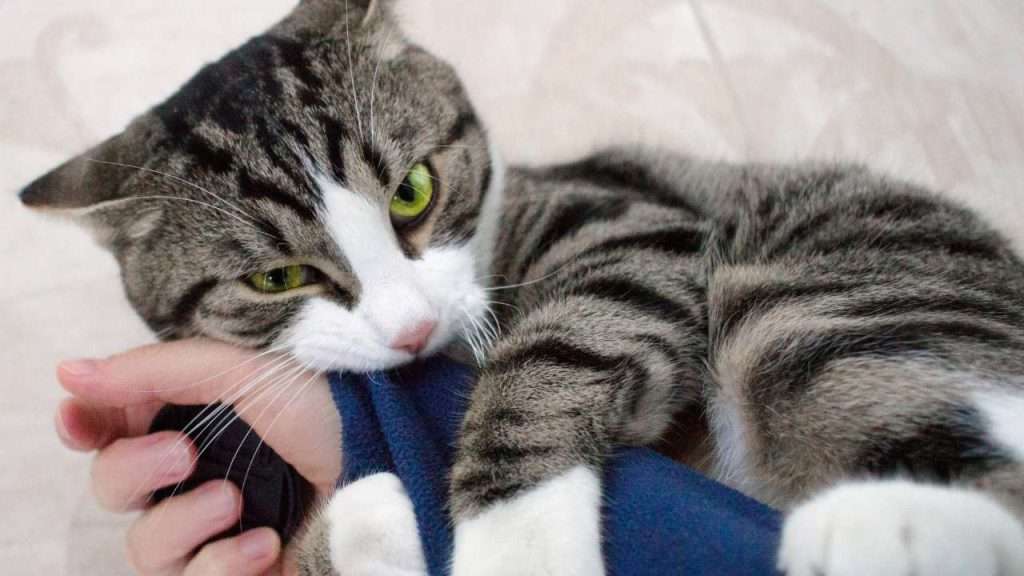
Picture this: You’re lounging on the couch, and out of nowhere, your feline friend wraps her paws around your arm, nuzzles in… then chomps down. Sound familiar?
If you’ve ever wondered, “Why does my cat hug my arm and bite me?” you’re not alone. It’s the kind of quirky cat conduct that bewilders even seasoned pet parents.
The reasons why your cat hugs your arm and bites me can be grounded from showing affection, reliving their kitten teething days, expressing their hunter instinct, or simply trying to get your undivided attention.
In this post, we’ll unravel this feline mystery. So, get cozy (armguards optional), and let’s decode your cat’s love bites together.
Table of Contents
Why Does My Cat Hug My Arm and Bite Me?
As a cat owner, chances are good that you’ve experienced this behavior at least once. Now, let’s break the mystery down together, shall we?
The ‘Love Bite’
Ever heard of love bites? No, I’m not talking about those marks left behind by an overly affectionate partner. In the feline world, love bites are a thing too!

These bites are a cat’s way of expressing affection or signaling that they’ve had enough of your petting. It’s their way of saying, “Hey, I love you, but I need a break.” Sounds confusing? Welcome to the world of cats!
How can you tell if your cat’s bite is a love bite? Well, if they’re relaxed, purring, licking, or nuzzling you, chances are they’re giving you a love nibble. It’s more of a gentle gnaw than a full-on chomp.
How to Navigate Love Bites
Love bites are cute until they’re not. To prevent or reduce these bites, here are some practical tips:
- Respect your cat’s boundaries: notice when they’re done with the petting, and don’t push it.
- Redirect their attention to a toy: when you feel that bite coming, distract them with their favorite toys.
- Use a verbal cue or a spray bottle to discourage the behavior: just remember, it’s about gentle correction, not punishment.
Teething Troubles

If you’re dealing with a kitten, the biting could be due to teething. It’s a perfectly normal part of their growth and development. Just like human babies, kittens also experience discomfort when their teeth start to emerge. And unfortunately for you, your arm might just be their favorite chew toy!
Signs that your kitten is teething include sore gums, decreased appetite, excessive chewing, or pawing at their mouth.
Helping Your Kitten Through Teething
When your kitten is teething, it can be an uncomfortable time for both of you. Here are some ways to help:
- Give them a cold wet washcloth: it can soothe their sore gums.
- Offer a frozen carrot: they’ll love the cool crunchiness.
- Invest in teething toys: they’re made specifically for this purpose.
- Move away when they try to bite: it helps in setting boundaries.
The Hunting Instinct
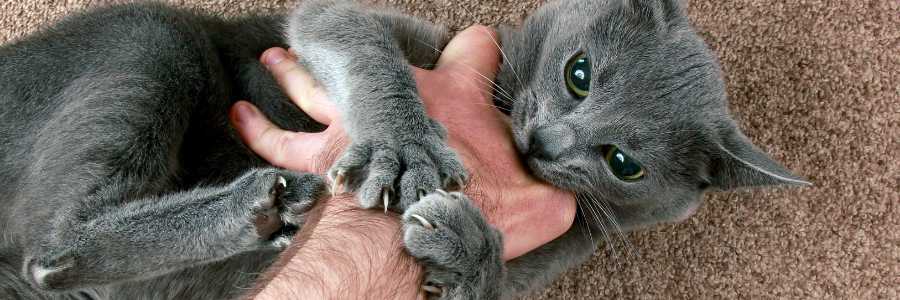
Have you ever wondered, “Why does my cat hug my arm and bite me?” Well, it could be your furry friend’s hunting instinct taking over. This natural and innate drive in cats can transform your arm into impromptu prey, especially when your feline companion is bored or under-stimulated.
When your cat is on the prowl, watch out for signs like alertness, stalking, pouncing, or biting hard. These are telltale signs of their hunting instincts at play.
How to Satisfy Your Cat’s Hunting Instinct
Now, you may be thinking, how can I satisfy this instinct without becoming prey? Here are a few tips:
- Introduce interactive toys, such as catnip mice or teaser toys. Your cat’s eyes will light up with a laser pointer, trust me!
- Engage them in regular play sessions. Ideally, these should be before feeding times. It’s like their own miniature hunt!
Aggression

Aggression in cats can be a cause for concern. It can stem from various factors like fear, pain, illness, territoriality, or competition. Tense body language, hissing, growling, scratching, or repeated hard biting are signs that your cat isn’t just playing around.
Tips to Curb Aggression
Aggression isn’t a trait that we want to encourage in our beloved pets. Here are some tips to help manage and prevent it:
- Identify and eliminate triggers that might be causing aggression.
- Make sure your cat has a safe and comfortable environment to retreat to.
- If need be, consult a vet or a behaviorist. They can provide expert advice tailored to your cat’s needs.
Craving Attention
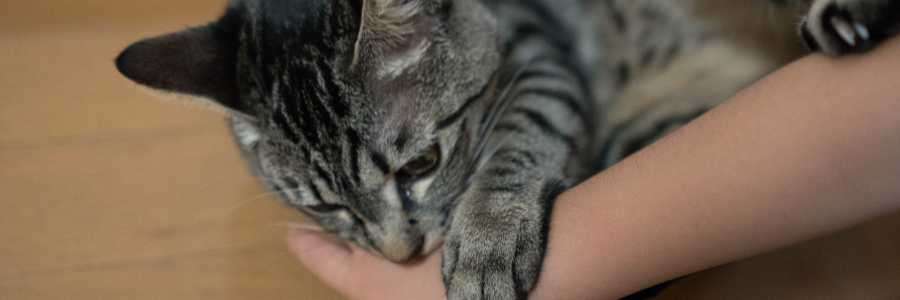
Sometimes, the question isn’t “Why does my cat hug my arm and bite me hard,” but rather “Why does my cat hug my arm and bite me gently?” This could be your cat’s way of seeking attention, especially if they feel lonely, bored, or neglected.
Signs of attention-seeking include being vocal, following you around, rubbing against you, or gently and intermittently biting your arm.
Fulfilling Your Cat’s Need for Attention
We all love a little attention now and then, and cats are no different. Here’s how you can give your feline friend the attention they crave:
- Spend more time with your cat. A little quality time can go a long way in making them feel loved and cared for.
- Talk, pet, and play with them. These interactions strengthen your bond.
- Reward good behavior with treats or praise. Remember, positive reinforcement is key!
Wrap it Up
In the end, remember that cats have their unique ways of communicating with us. Sometimes that involves a bite or two. But armed with this knowledge, you can now better understand and respond to your cat’s seemingly peculiar behavior.
So, the next time your cat hugs your arm and bites you, instead of wondering “why does my cat hug my arm and bite me?” you’ll probably just roll your eyes and say, “Cats! Can’t live with them, can’t live without them!”
For more insight into your cat’s behavior, check out our other articles.
Happy cat parenting!